
Provider Replay Cases#
Provider-specific documentation should be reproducible. The figures on this
page are built from committed provider artifacts in examples/data rather
than from live API calls. That makes the examples stable enough for Read the
Docs while still showing the real payload shapes used by SHOM, Hub’Eau, SIM2,
and hydrography providers.
Policy#
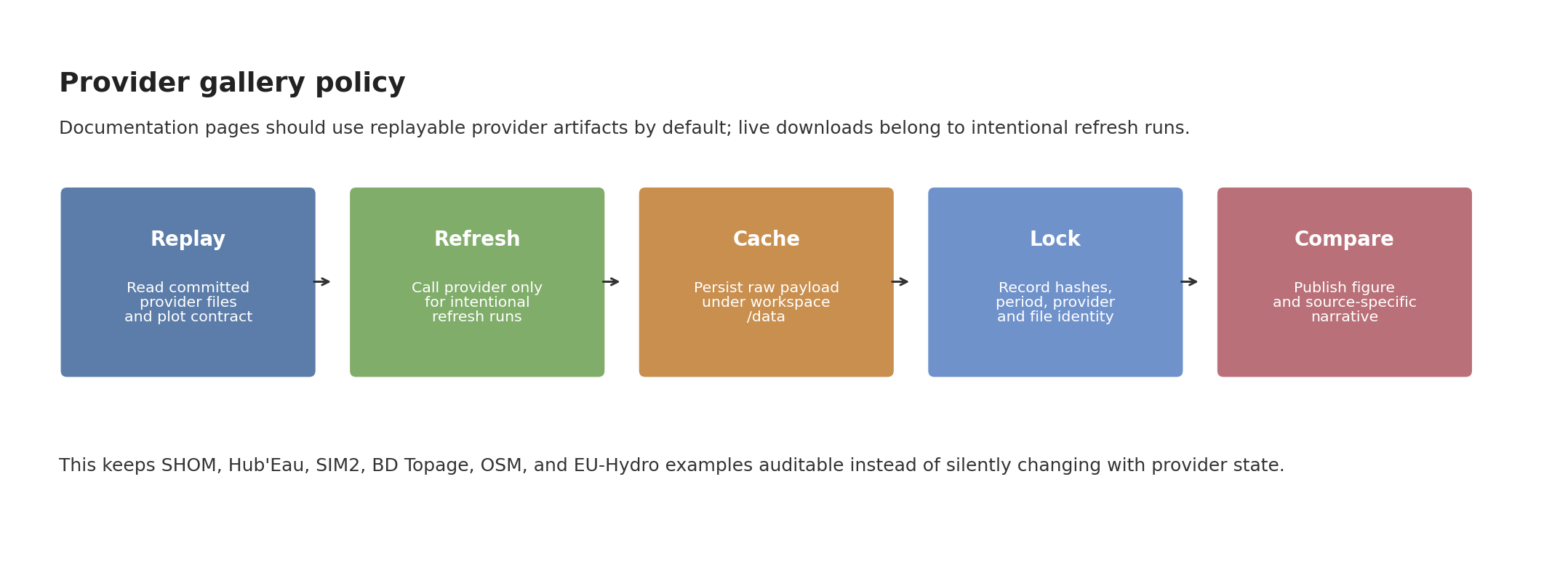
Fig. 36 The default documentation path is replay first. Live downloads should be intentional refresh runs, followed by cache persistence, lockfile recording, and a visible provider-specific comparison.#
Hub’Eau Replay#
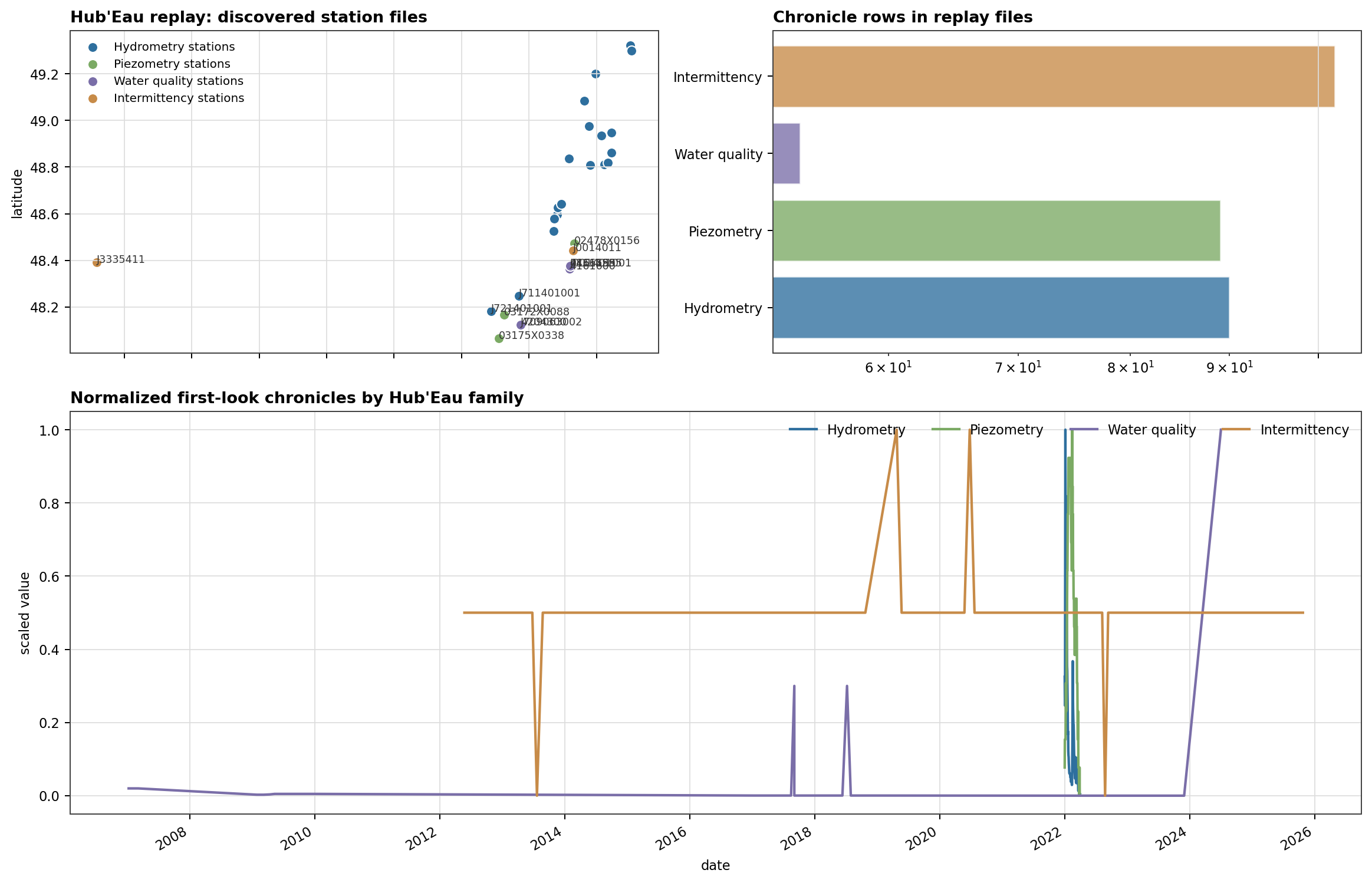
Fig. 37 Hub’Eau is not one visual contract. Hydrometry, piezometry, water quality, and ONDE-style intermittency all use station metadata plus chronicles, but their units, quality flags, and downstream meanings differ. The replay figure keeps those families visible on one page without calling the API.#
SHOM Replay#
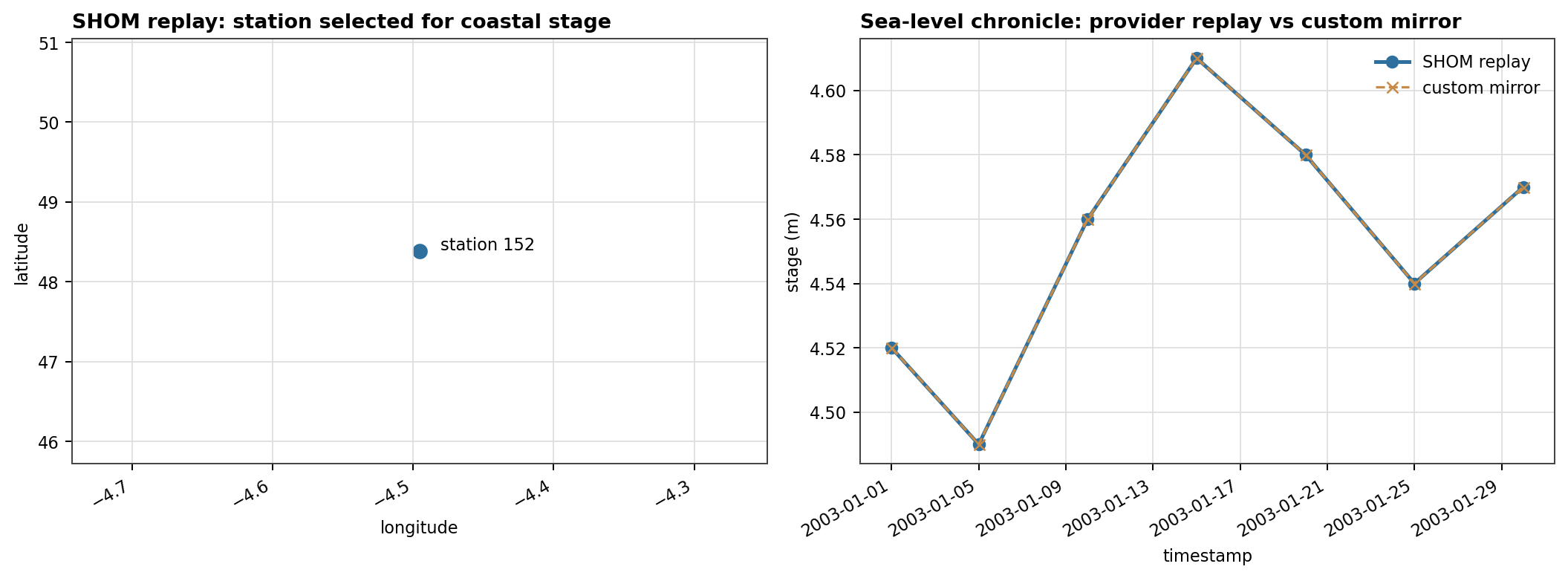
Fig. 38 The SHOM replay shows both station selection and the sea-level chronicle. The custom mirror is useful for testing the loader and for documenting the boundary-stage contract without depending on a live coastal-data request.#
Hydrography Replay#
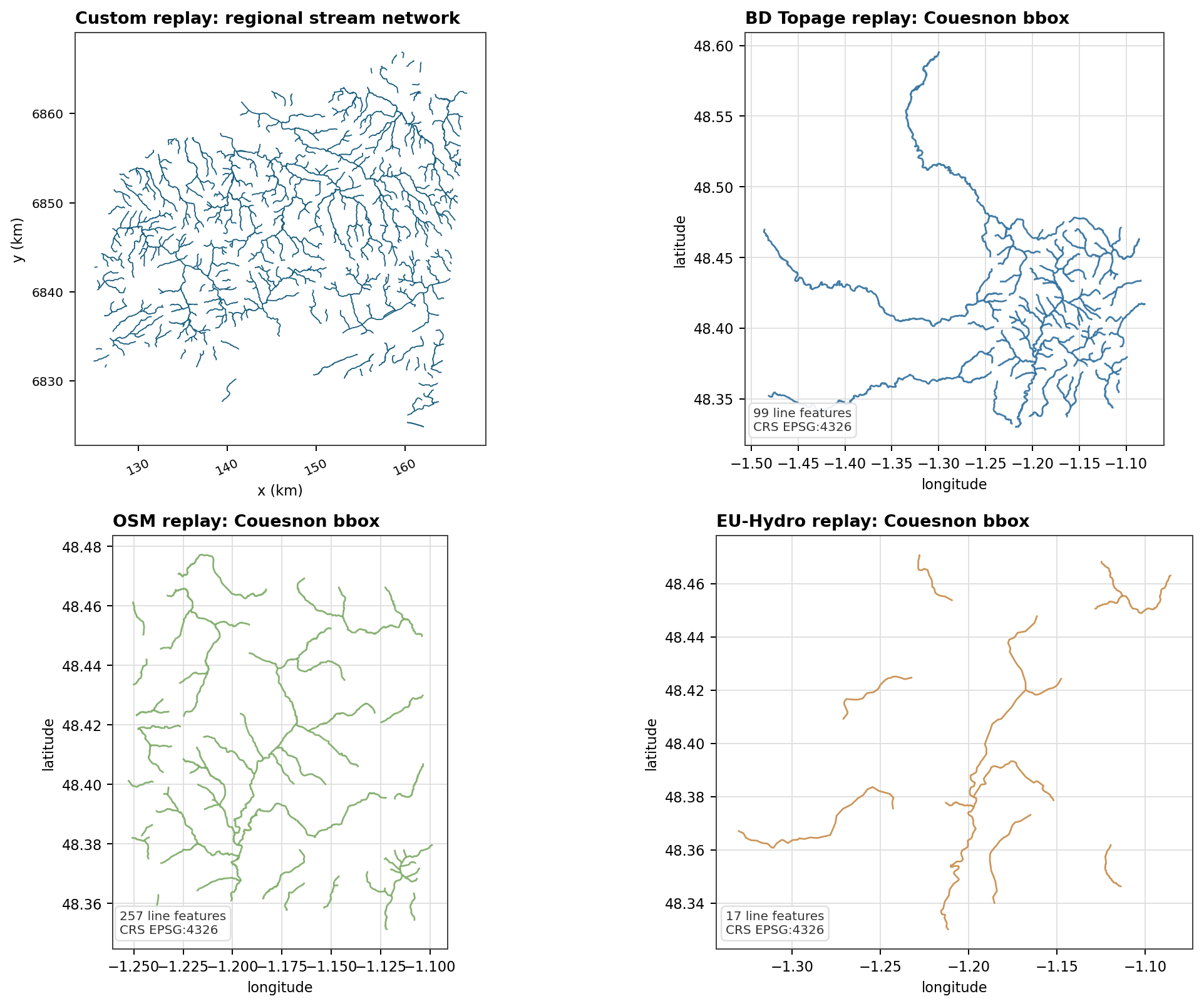
Fig. 39 The committed replay now covers the local/custom regional network and a
small Couesnon bbox for BD Topage, OSM, and EU-Hydro. The three public
provider files are stored as GPKG artifacts in examples/data/hydrography.#
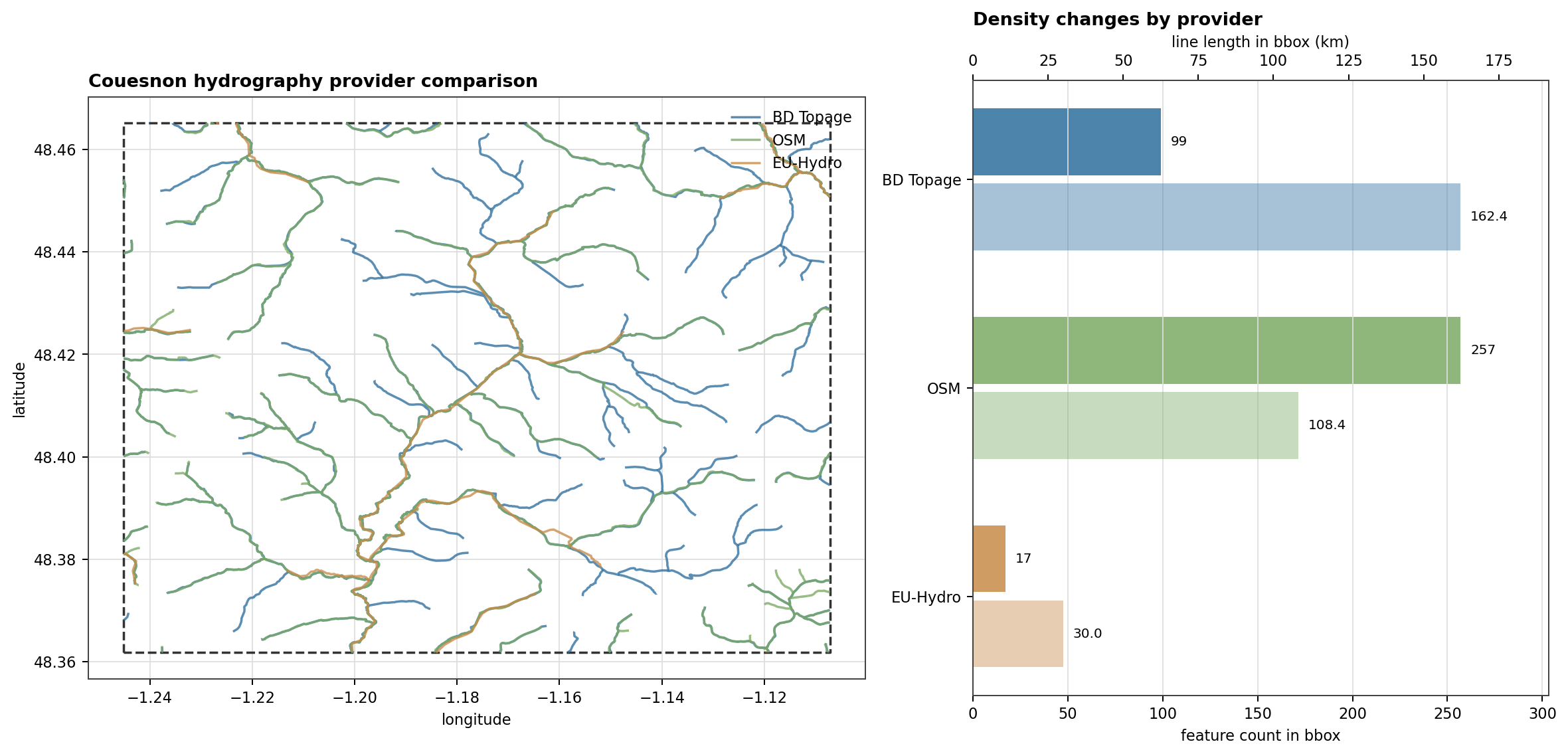
Fig. 40 The comparison clips all three provider payloads to the same bbox before plotting density. This makes the provider choice visible: OSM is denser in small tributaries, EU-Hydro is coarser, and BD Topage sits between them for this local case.#
The provider refresh script is intentionally separate from the replay-only figure renderer:
python docs/source/user_guide/data/refresh_hydrography_provider_replays.py --case couesnon --providers bdtopage osm euhydro
SIM2 Replay#
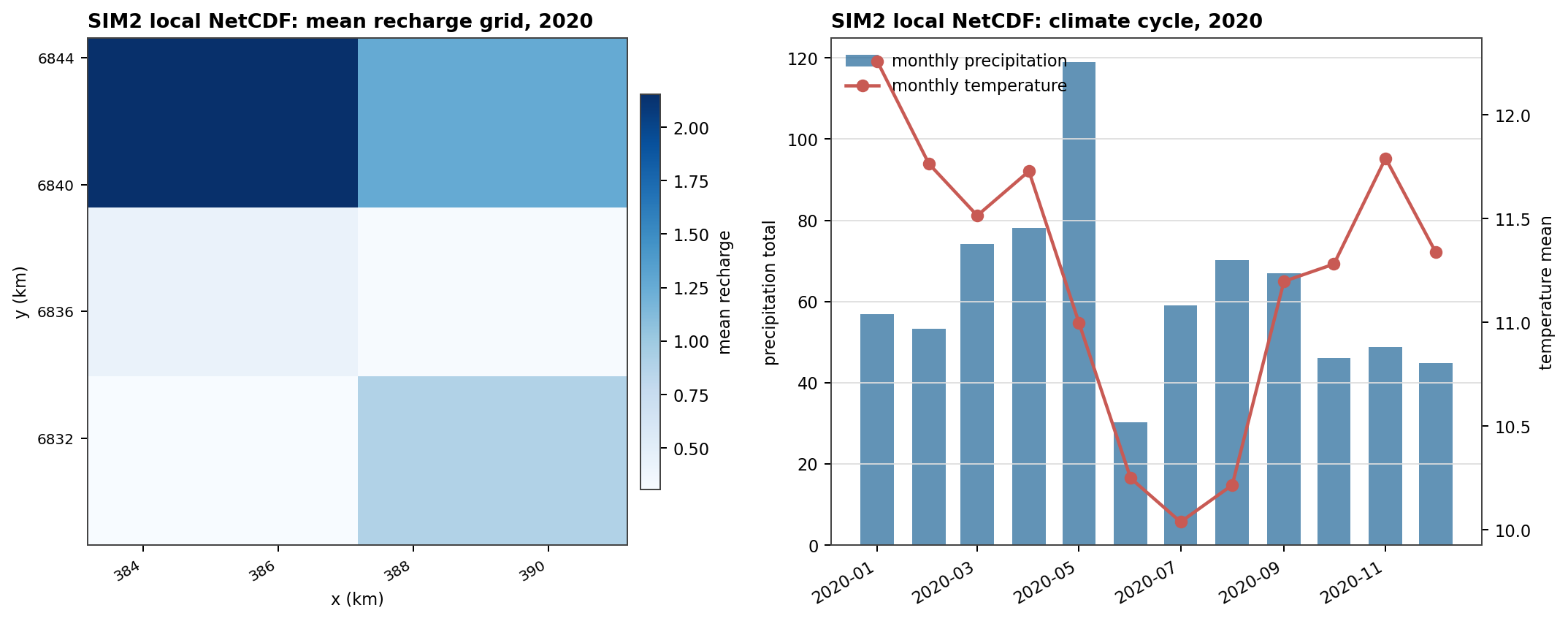
Fig. 41 SIM2 replay needs both a map and a temporal aggregate: the gridded support confirms spatial coverage, while monthly summaries make the selected period auditable.#
Next Provider Cases#
The remaining provider-specific gallery work should be done in this order:
Repeat the hydrography comparison on a second basin where OSM completeness is less favorable, so the documentation does not imply that one density result generalizes everywhere.
Add a larger EU-Hydro basin where the continental product is used at its intended scale rather than only as a contrast on a small bbox.
A coastal SHOM basin where the stage chronicle is connected to an actual coastal boundary condition rather than only a data replay.
A Hub’Eau refresh case that displays downloaded station discovery next to a frozen replay from the cache and lockfile.
See also#
[data] DataManagersConfig for the
hubeau,shom,sim2,bdtopage,osm, andeuhydrosource values shown in the figures above.Hydrography for the operational contract behind the BD Topage, OSM, and EU-Hydro comparison.
Cache And Lockfiles for the replay, refresh, cache, and lock ladder shown in the policy figure above.
Troubleshooting for network and cache errors encountered when a live refresh is used instead of a committed replay.
Data Managers And External Dependencies for the provider inventory and external-dependency constraints behind these families.